 Supporter culture · United States
Brazil supporters in the United States — where the Seleção watches
How Brazilian diaspora communities across Newark, Framingham, Miami, and LA organize watch parties when the Seleção plays — culture, venues, and 2026 match stops.
Five World Cup titles. The most recognizable jersey in the sport. A diaspora spread across Massachusetts mill towns, a Newark neighborhood that rebuilt itself on Portuguese and Brazilian culture, and the ocean-facing blocks of Miami and Los Angeles. Brazil’s supporter base in the United States isn’t just large — it’s rooted in decades of immigration that predates any specific tournament cycle.
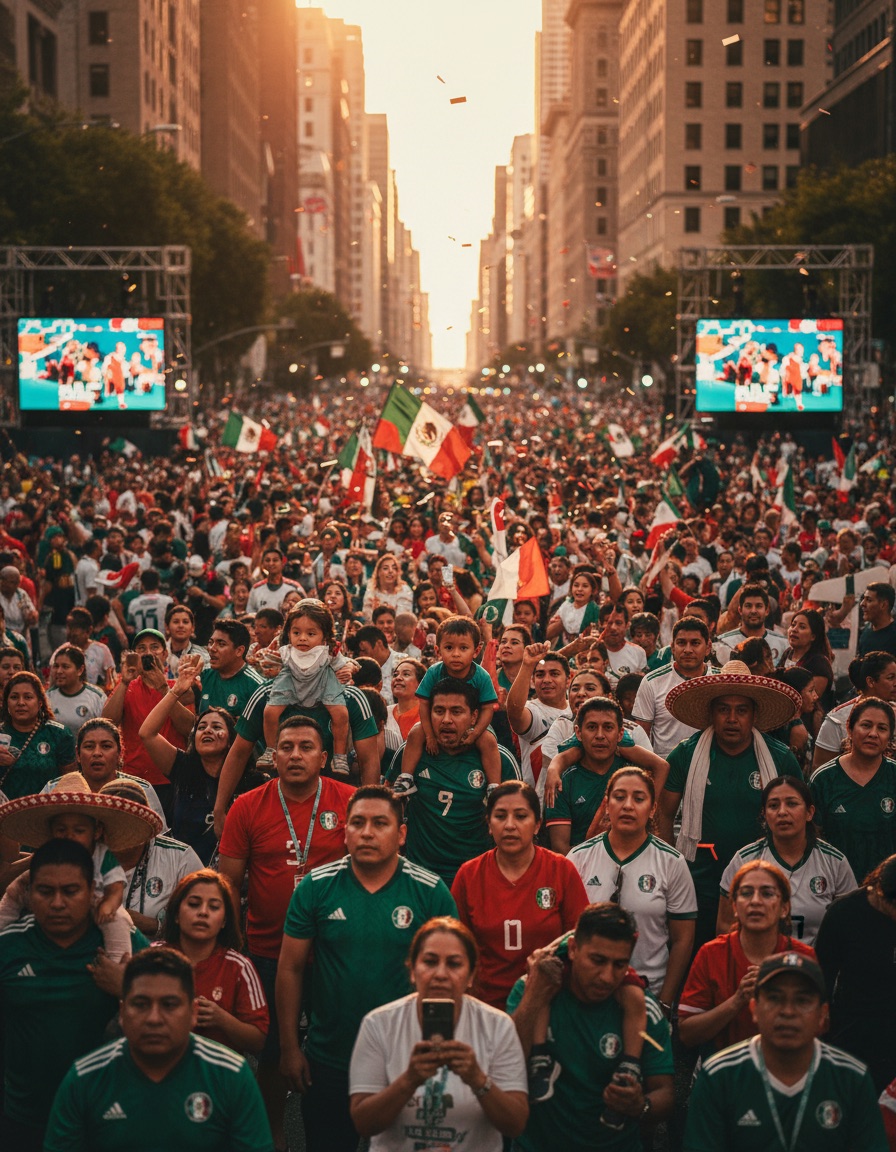
When the Seleção plays, something shifts in each of these communities. Restaurants that normally close for lunch stay open for the 9 a.m. kickoff. Drums come out. An event that looks like a watch party is really something closer to a cultural gathering that uses the match as its reason to convene.
Here’s how that looks across the country in the summer of 2026, a tournament where Brazil plays all three group-stage matches on US soil.
The community: where 1.7 million Brazilians settled
The Brazilian Ministry of Foreign Affairs estimates 1.775 million Brazilian Americans, and that’s before accounting for undocumented residents and census undercounting. Community organizations in Newark estimate the actual metro-area Brazilian population there runs “double or triple” official counts. The true footprint of this diaspora is substantially larger than most Americans realize.
The Ironbound, Newark. This is the anchor. When Brazilian immigrants arrived in waves during the economic crises of the late 1980s and 1990s, they followed chain migration routes into an existing Lusophone enclave that Portuguese immigrants had built in Newark’s Ironbound district since the 1960s. What was “Little Portugal” became, demographically, something closer to Little Brazil. The Rutgers Latino Studies Research Initiative documents core Ironbound census tracts showing 19–24% Brazilian ancestry, with Ferry Street functioning as a commercial and cultural spine where daily life runs almost entirely in Portuguese. The Brazilian Consulate places the floating metro-area community at numbers that dwarf what any official survey captures.
Framingham, Massachusetts. The GBH/WGBH report from late 2024 confirmed what the community has known for decades: Brazilians are Massachusetts’s largest immigrant group, with roughly 140,000 documented residents statewide and potentially 280,000 when undocumented individuals are factored in. Framingham has the highest percentage of Brazilians of any municipality in the state. Somerville has the highest raw count. The community contributes an estimated $8 billion annually to the state’s gross product. When Framingham decided in April 2026 not to host an official public World Cup watch party, citing resource strain from seven nearby Foxborough matches, the Boston Globe covered the community pushback. City Councilor Tracey Bryant acknowledged: “We have restaurants in Framingham that are going to host watch parties.” That’s exactly how it works. The parties don’t disappear; they go private and community-organized.
Miami-Dade and South Florida. Florida’s 134,807 documented Brazilian Americans concentrate heavily in Miami-Dade, Broward, and Orange counties. For the 2026 tournament, this community gets something remarkable: Brazil plays its final group stage match, vs. Scotland on June 24 at 6 p.m. ET, at Hard Rock Stadium less than 20 miles from where many of them live.
Los Angeles: Venice Boulevard and Culver City. LA’s Brazilian concentration runs along Venice Boulevard through the Culver City and Palms neighborhoods. This is the same strip where, per Discover Los Angeles, “raucous, headline-making World Cup parties erupted” in 1994 — the last time the US hosted, and the last time Brazil won. That’s a 32-year drought and a very specific street with very specific memories.
The community doesn’t have a single landmark bar in every city. What it has is density, and density organizes itself.
Where they watch: venues and neighborhoods by hub
Two venues clear the 2-source bar for naming. Everything else gets written at the neighborhood level.
Boteco Miami — 916 NE 79th St, Miami, FL. Boteco describes itself the way the Brazilian community describes a boteco: “a low-key, stress-free bar where you can enjoy a cold beer and cocktails.” Brazilians have gathered here for samba nights and futebol matches for over a decade. Weekend feijoada is served buffet-style with farofa, fried banana, and five cuts of meat. This isn’t a sports bar that happens to show soccer. It’s a Brazilian community space that also has TVs, and that distinction matters for how the room feels during a match.
Blitz Sportsbar — 179 Wilson Avenue, Newark, NJ. Listed by both GoIronbound.com and NewarkHappening.com, Blitz sits on the Ironbound’s Wilson Avenue and is the confirmed soccer-watching anchor of the neighborhood. Reviews cite its draw for Champions League and Europa League matches. For a World Cup summer with a Brazilian community steps away, the crowd calculus shifts considerably. The Ironbound itself is aiming to be, per TAPinto Newark’s coverage, “the place to be for FIFA World Cup fans” during the tournament.
For Framingham, the biggest Brazilian municipality in Massachusetts, watch parties scatter across private homes and community-organized restaurant events. The Boston Globe confirmed individual restaurants are hosting. We couldn’t verify a single Framingham venue by name from two primary sources in time for this post. If you run or know one, claim it on Pitch Party so the community can find you.
In LA, Café Brasil on Venice Boulevard is the acknowledged “OG Brazilian eatery” in the Braziltown corridor, per Discover Los Angeles, where fans gather on the patio for matches. That neighborhood carries enough cultural memory from 1994 to make any Brazil game feel weighted differently than a typical sports-bar watch.
Seleção supporters Find Brazil watch parties near you — or list yours → Open the Brazil team pageMatch-day traditions — batucada, feijoada, and the goal celebration no one choreographs
Brazilian watch parties have a rhythm that’s distinct enough to describe in advance.
The batucada arrives before the match. A batucada is a percussion ensemble: surdo bass drums anchoring the bottom end, repinique cutting through the top, tamborim and cuíca filling the middle. These come from the samba school tradition. At a community watch party in Ironbound or Framingham, it might be two or three people with handheld drums. It doesn’t need to be the full ensemble. The rhythm locks in, the chant structure follows, and the room sounds nothing like an American sports bar.
The chant that travels. “Olé, olé, olé, olé — Seleção, Seleção” is the lingua franca of Brazilian supporter sections globally. It builds in waves, drops to near-silence on a dangerous opponent counter, and explodes after a goal in a way that needs no staging. Brazilian fans don’t choreograph their celebrations. The release is genuine, which is part of why watching with them is worth it.
The Brazil-Argentina layer. Any time the draw puts Brazil and Argentina on a potential knockout collision course, the energy in Brazilian communities shifts. The rivalry predates any specific chant or song. It’s a full-century conversation about identity and football supremacy that Brazilian fans carry into every tournament. In 2026, with Argentina as defending champions, that backdrop is especially charged.
Food anchors the whole event. Feijoada is Saturday lunch: black bean stew, pork cuts, sausage, farofa, fried banana. Watch parties that fall on weekend mornings build the meal into the match. Coxinha (fried chicken croquettes) and pastel (half-moon fried pastries filled with cheese or beef) circulate throughout. Guaraná Antarctica, Brazil’s national soft drink, stays on the table. Brahma and Skol handle the beer side. The food isn’t incidental. Brazilian fans eat through the match the same way Argentine fans do — it’s a full afternoon, not a two-hour stop.
The 1994 weight. Brazil won that tournament on US soil, at the Rose Bowl in Los Angeles. The fans in the Palms and Culver City neighborhoods who watched it then, and the community members who heard about it from parents and older relatives, carry that into every US-hosted Brazil match. The nostalgia layers run 1958 (first title), 1970 (Pelé’s peak), 1994 (US soil), 2002 (last title) — and then 24 years of nothing. The 2026 cycle carries a particular emotional weight for supporters who’d like to end that drought on the same continent where it was last resolved.
The Brazilian supporter scene in the United States is genuinely one of the more rewarding to plug into during a World Cup summer — not because it’s the loudest, but because it’s the most complete, from the food to the drums to the two hours of postgame conversation nobody wants to end.
How to host a watch party for Brazil fans — practical guide
Hosting a Seleção watch party for a community you’re new to takes less insider knowledge than hosting an Argentine asado. There are still a few things worth knowing.
Set the food agenda early. Feijoada takes time. If you’re cooking it yourself, start the night before. If you’re ordering from a local Brazilian restaurant, call ahead by at least two days during tournament season. Restaurants that normally don’t do large takeout orders will be overwhelmed. For a smaller group, pastel and coxinha are much easier to source or make and they hold up through halftime.
Plan for the group-stage schedule. Brazil’s three group matches in 2026:
- June 13: Brazil vs. Morocco, MetLife Stadium, East Rutherford, NJ — 6 p.m. ET
- June 19: Brazil vs. Haiti, Lincoln Financial Field, Philadelphia — 9 p.m. ET
- June 24: Scotland vs. Brazil, Hard Rock Stadium, Miami — 6 p.m. ET
The June 19 match starts at 9 p.m. ET. If your crowd has work the next morning, plan for a shorter tail. The June 24 Miami match is the one that will draw the biggest crowds nationally, full stop.
Drums are welcome — check your space first. If anyone in your group has drums or shakers, don’t discourage it. Brazilian watch parties are louder than American ones. That’s a feature. If you’re in an apartment with neighbors below you at 6 p.m. on a June Saturday, plan accordingly.
Use Pitch Party to manage the guest list. Brazilian watch parties run large. The community culture pulls in extended networks, and a public listing on Pitch Party can fill a bar-style space faster than a group text manages. Set up your event on the team page, share the private link, and let RSVPs gate the address. That way you’re not turning people away at the door.
For the full setup, read our complete watch party hosting guide. It covers sound, screen size, food timing, and how to handle the wave of late arrivals that’s inevitable when you’re hosting 30 people for a 6 p.m. kickoff.
List your party Set kickoff, share the link — Brazil fans find you → Open Pitch Party for BrazilRead next
- Where to watch the 2026 World Cup in Miami — and how to prepare for Brazil vs. Scotland
- New York and New Jersey soccer watch parties — Ironbound included
- How to host a soccer watch party people actually show up to
Sources
- Rutgers Latino Studies Research Initiative — “Between Iron and Borders: The Brazilian Community in the Ironbound District of Newark, NJ” (https://lsri.rutgers.edu/brazilian-community-ironbound-newark/)
- GBH/WGBH — “New report says Brazilians, the biggest immigrant group in Mass., shouldn’t be forgotten” (https://www.wgbh.org/news/local/2024-10-24/new-report-says-brazilians-the-biggest-immigrant-group-in-mass-shouldnt-be-forgotten)
- Wikipedia — Brazilian Americans (https://en.wikipedia.org/wiki/Brazilian_Americans)
- Boston Globe — “Soccer-mad Framingham will not host a World Cup watch party” (https://www.bostonglobe.com/2026/04/29/metro/framingham-decides-against-world-cup-watch-party/)
- FOX Sports — Brazil World Cup 2026 Schedule: Locations, Dates, Times (https://www.foxsports.com/stories/soccer/brazil-world-cup-2026-schedule-locations-dates-times)
- WLRN — “Miami’s World Cup lineup confirmed: Brazil, Colombia, Uruguay will play at the Hard Rock” (https://www.wlrn.org/sports/2025-12-08/miami-world-cup-matches-hard-rock-stadium-fifa)
- Boteco Miami — official website (https://botecomiami.com/)
- GoIronbound.com — Blitz Sportsbar listing (https://goironbound.com/listing/blitz-sportsbar/)
- NewarkHappening.com — Blitz Sports Bar (https://www.newarkhappening.com/listing/blitz-sports-bar/149/)
- Discover Los Angeles — “Where to Watch the World Cup in LA” (https://www.discoverlosangeles.com/things-to-do/where-to-watch-the-world-cup-in-la)
- Brazilian Football — “Samba in the Stands: The Rhythmic Pulse of Brazilian Football Fandom” (https://www.brazilian-football.com/samba-in-the-stands-the-rhythmic-pulse-of-brazilian-football-fandom/)
Frequently asked
Quick answers
- Where is the largest Brazilian community in the United States?
- Massachusetts leads by percentage. Brazilians are the state's largest immigrant group, with roughly 140,000 documented residents and potentially double that when undocumented residents are counted. Framingham has the highest Brazilian share of any municipality in Massachusetts. Newark's Ironbound district in New Jersey is the most geographically dense Brazilian-Portuguese enclave in the country, with a floating metro-area population community organizations estimate at far above Census counts.
- Where does Brazil play in the 2026 World Cup in the United States?
- Brazil's group stage runs entirely in the Eastern region of the US. They open June 13 at MetLife Stadium in East Rutherford, NJ (vs. Morocco, 6 p.m. ET), play June 19 at Lincoln Financial Field in Philadelphia (vs. Haiti, 9 p.m. ET), and close the group stage June 24 at Hard Rock Stadium in Miami (vs. Scotland, 6 p.m. ET). All three host cities have substantial Brazilian-American communities nearby.
- What is a batucada and why does it matter at Brazil watch parties?
- A batucada is a percussion ensemble drawn from the samba school tradition: surdo bass drums, repinique, tamborim, and cuíca. Brazilian supporter sections worldwide bring batucadas to stadium sections and overflow fan zones. At a watch party, expect a scaled-down version: handheld drums, shakers, and the call-and-response chant structure that Brazilian fans have maintained across five World Cup wins.
- What food do Brazilian fans eat during watch parties?
- Feijoada is the anchor: black bean stew with pork, sausage, farofa, and fried banana. It's typically served at weekend lunch, which is why Brazilian watch parties that start at noon run longer than you expect. The meal takes the whole first half to work through. Coxinha (chicken croquettes) and pastel (fried pastries) circulate as the match goes on. Guaraná Antarctica is the soft drink; Brahma or Skol for beer.
- How can I find Brazilian fan watch parties near me for the 2026 World Cup?
- Check Pitch Party's discover map filtered by the Brazil team page. Brazilian-organized events list there as both public parties and semi-private community gatherings that share links. Beyond the app, Brazilian community groups on Facebook (search 'Brasileiros em [city]') and WhatsApp networks specific to each metro are the fastest way to hear about private events.
Pitch Party · the app
Stop guessing where to watch.
Open the map. Find your match.
Pitch Party maps every public watch party near you for every World Cup 2026 match. RSVP in one tap. List your own watch party in two.